
By Sarah Smith, Clinical Specialist and Owner of Byron Health
Let’s be honest, none of us want to experience pain and injury. It limits what we can do, affects our mood and our sleep, and generally feels rubbish. I get it. But after 20+ years as a physio, one thing I have learnt is that we’re often not great at helping ourselves, and that there are some very simple things that we can do to. I began this blog thinking I would talk about lots of different lifestyle aspects that help our recovery – Nutrition, Sleep, Hydration, Stress and Stamina, but once I dived into Nutrition, I began to realise it was a much bigger fish to fry than I anticipated. So, whilst this blog is looking solely at nutrition and what’s on our plate, it’s now become a mini-series, and I’m looking forward to covering these other areas that impact our recovery and wellness over the next few months.
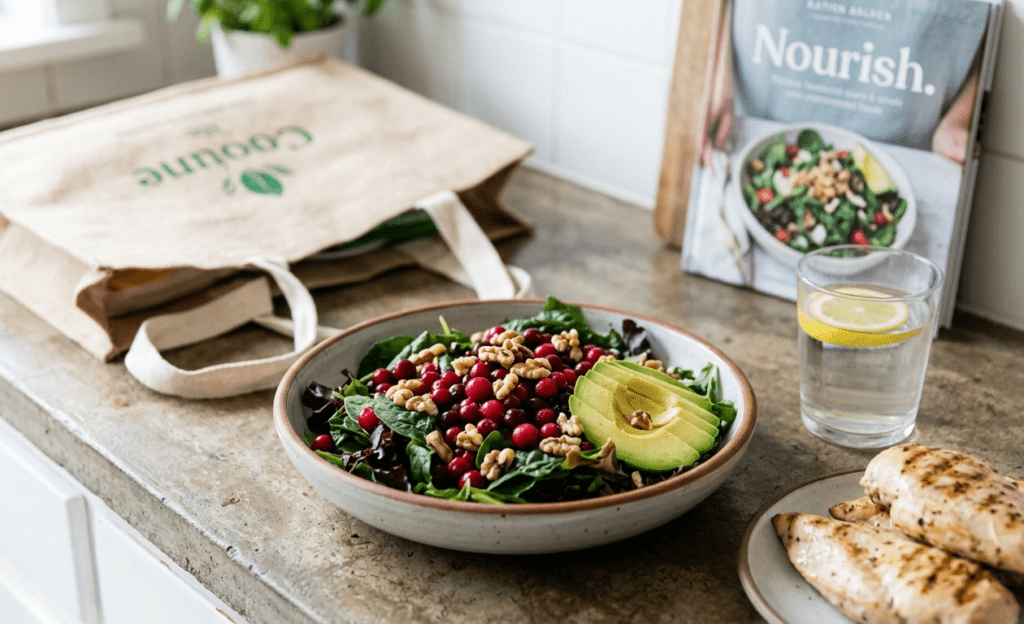
Nutrition – let’s unpack the shopping…
I was at a conference last weekend and although they were talking about something very different (data collection and research in case you were wondering), one of the speakers quoted the phrase – “you put sh1t in, you’ll get sh1t out”. That’s fair. Nutrition is one of the many things I wish the national curriculum in schools covered (along with finance instead of algebra in maths, and exercise instead of ball games in PE). Kids do a tiny amount of food-based education at school and yet it’s undoubtedly one of the single biggest factors to influence our well-being on so many levels. For many of us who have an interest in food and nutrition, it’s a journey that begun off our own back, and with a huge amount of noise in the field it can be difficult to know what’s good and what’s not good for us.
I recently watched the documentary that Joe Wicks did about ultra processed foods (UPF’s) and about how the food industry market so-called healthy food products, which are jampacked with harmful ingredients. We eat one snack with those chemicals – which are permitted under FSA guidelines in those small doses after all – our body is robust to cope with it.
But eating foods containing these harmful ingredients on more than on the odd occasion, overtime will take its toll. Another great insight I had was on a CPD event a couple of years ago about chronic pain. A consultant talked about the prevalence of chronic pain in the western world versus the east, and that one of the significant differences there is diet. Another point he made that has stuck with me closely ever since is that the more processes food has gone through before it gets into our bodies, the less nutrition it will give us
So aside from not unintentionally poisoning ourselves, why is what we eat so important for recovery?
Protein has had a huge amount of attention recently, and rightly so. It acts as the raw material your body needs to rebuild itself after an injury. Think of it as the “bricks and mortar” for repairing damaged structures. If we look at our bodies either trying to heal an injury, or simply build strength and resilience, they’re going to rely heavily on protein. And if protein is important, the next question is do we consume enough? I have heard varying but similar calculations in the past, and most sources tend to sit around 1.1g of protein per kg of body weight, but as you can see below, this varied on our output & demands.
(Gemini helped me out a bit here);
Weight Loss**: 1.6 – 2.4g protein per kg of body weight (**Helps preserve muscle while burning fat).
Sedentary Adult: minimum 0.8g protein per kg of body weight
Moderate* Activity: 1.2 – 1.5g protein per kg of body weight (*those who exercise 3–4 times a week).
Athletes/High Intensity: 1.7 – 2.2g protein per kg of body weight
Now this is only one source, but if you consider where you sit on this picture, then record your weight in kg, and divide it by the number from the table above, you have a reasonable idea of how much you might need. And whilst the numbers above are a scale, if were recovering from an injury or exercising to build strength and resilience, we’re likely to need the higher figure.

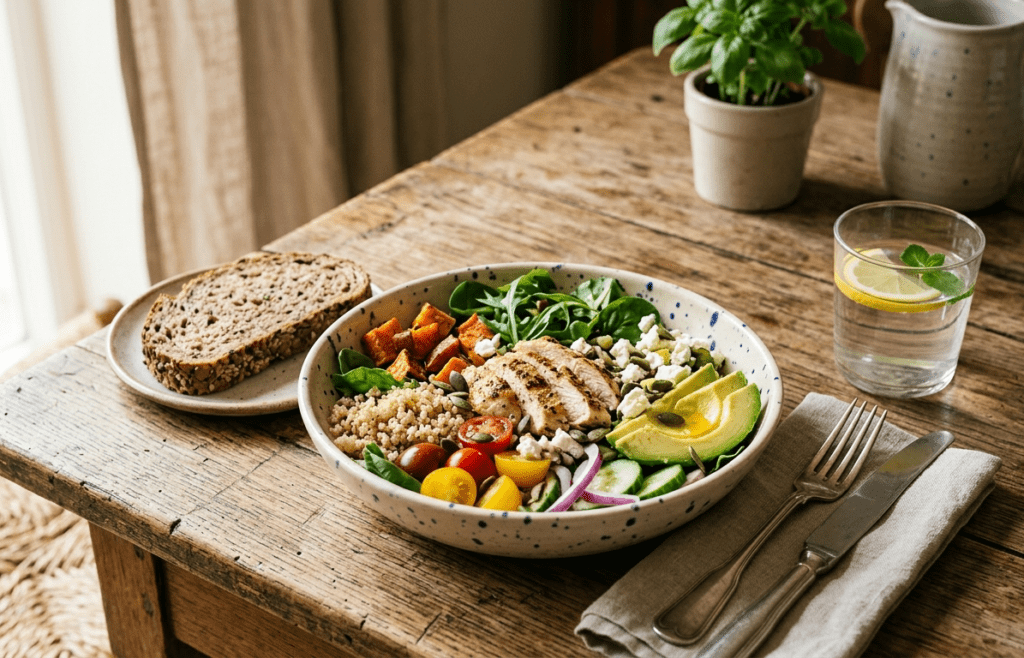
Noone ever stops and teaches us what foods are high in protein or more importantly why we need it in our bodies. In his time as Head of Sports Science and Medicine at a local high-level sports team (I’ll let them maintain anonymity), Will once asked the team chef if the players could have more protein in their diet. The chef’s response was “they have pasta every day”. The fact that a chef – working in pro sport – believed pasta was high in protein says it all. If a chef doesn’t understand the nutrient values of what their cooking, then I suspect a high proportion of the population might not. An experienced PT recently told me “Base every meal around protein” – in other words, decide on your protein source, then build the meal around that. Using that approach, instead of thinking “let’s have pasta for dinner” – the thought process becomes “I’ll have chicken for dinner – shall I have it with pasta in tomato or creamy sauce?”. The nutritional label on foods will always tell us its protein values, and if you’re still not sure ask google. I’m not saying we must get out the weighing scales and calculator but spending a week tuning into what protein levels different foods have and getting an idea of how much were consuming, can be hugely insightful.
Anything else?
Aside from protein, fruit & veg is another biggie that many diets lack. The various campaigns that supermarkets have used over recent years have taught us all that we need 5/7/9 (seems to vary depending on the day of the week) portions per day. But why? While protein provides the “bricks” to rebuild tissue, fruits and vegetables provide the “workers” and “tools” that manage the construction site. They help to control inflammation, contribute to collagen synthesis & tissue repair, optimise bone & nerve function, and support energy and metabolism. Without them, the repair process is slower and more prone to complications like excessive swelling.
Now this is only one source, but if you consider where you sit on this picture, then record your weight in kg, and divide it by the number from the table above, you have a reasonable idea of how much you might need. And whilst the numbers above are a scale, if were recovering from an injury or exercising to build strength and resilience, we’re likely to need the higher figure.
Here comes ‘the but’.
A big argument around food is “I haven’t got time”, and another is always cost. I get it. We’d all rather spend our time and cash on trips to the Maldives right? But equally we all want to optimise what we are doing. And given what we’ve just discussed, whether we want to recover from an injury, or simply stay strong and active so we can enjoy life fully, surely taking our nutrition from average to optimal is a no brainer. We all make choices on how we spend our time, and taking some simple steps to adjust our routines to facilitate a better diet is time well invested. And as for cost – a sensible approach shouldn’t break the bank. A couple of Instagrammers who I follow prove this nicely…
@whatmolly.eats
@wendyfromnorthernireland
See, I said this was a big topic. And I’ve only scratched the surface. However, I feel like I may have said enough. In summary…
Plenty of fruit & veg
Keeping UPF’s to a minimum
Tune into your protein intake
We’ve all heard the phrase “you are what you eat”, and it’s true. Some sound investment in our nutrition now will pave a pathway for optimising your recovery and long-term resilience and performance.
Sarah Smith, Byron Health
Move Freely | Live Fully
👉 Contact us or book online today.
Your body deserves expert care. We’re here to help.