
Us runners are no strangers to hard work. Long runs, tempo sessions, recovery days — it’s a finely tuned balancing act. But many of us still hit frustrating roadblocks: recurring tightness, slow recovery, or those mysterious aches that appear mid-training and never quite go away.
At Byron Health, we’ve added new tech to help solve those puzzles — our shiny new VALD force plates! This state-of-the-art tool measures the way your body produces and absorbs force.
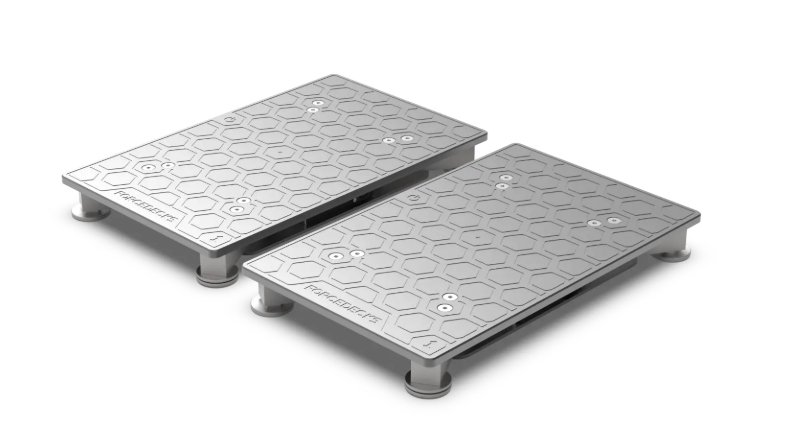
So, what on earth is a force plate?
These highly sensitive platforms capture how much force each leg generates when you jump, land, squat, or even stand still.
It tells us things we simply can’t see with the naked eye — like whether one leg is working harder than the other. It also provides an objective measurement, no more guessing.
Why does it matter for runners?
When you’re running, with each step your lower limb can be exposed to 6 times your body weight on average. On average;
- Doing 5K takes 4100 steps
- Doing 10K take 8700 steps
- A Half Marathon takes 19,000 steps
- A Marathon takes 40,000 steps
So even the smallest imbalance can add up — leading to increased load through one side of the body and, over time, irritation or injury. Force plate data helps us identify key factors such as:
Max strength – is your body able to produce enough force to help mitigate injury risk?
Asymmetries — are you loading one leg more than the other?
Rate of Force Development — how efficiently do your muscles produce strength, is this quick enough for running?
By tracking measuring these performance metrics, we can make smarter, evidence-based adjustments to your training and recovery plan
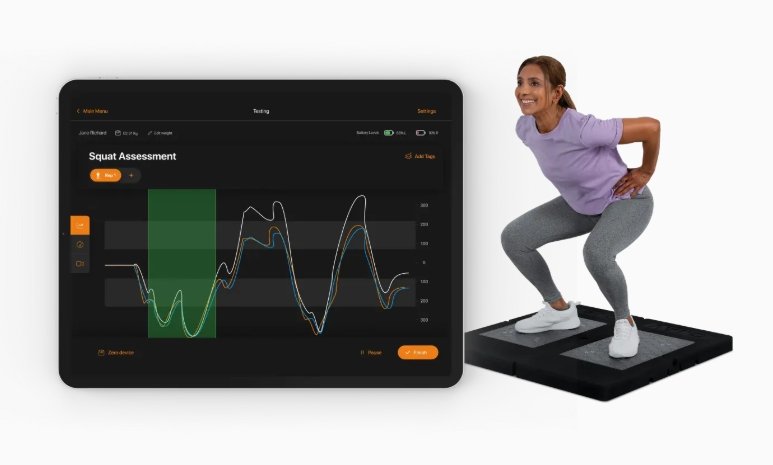
How We Use It at Byron Health
When a runner comes to us — whether for injury prevention or performance optimisation — we’ll start with a quick force plate assessment.
Here’s what that looks like:
- Jump Testing
- Balance Tests
- Strength testing
This data allows our physios to design truly personalised programs — not just generic strength work, but targeted exercises that address the exact imbalances contributing to overuse or inefficiency
The Results?
Our runners who’ve had force plate testing to guide their training see:
More consistent training
Fewer overuse injuries
Smoother, more efficient running mechanics
Improvements in cadence and times


These improvements come from identifying subtle but significant inequalities — things you’d never know without the data – but that make an immense difference!
Takeaways…
Sometimes, it’s not the miles that you’re running, it’s how your body is carrying you over those miles.
Using our VALD force plates, we can pick up detailed imbalances and fine-tune your training so you can perform at your best on race day!
If you’re training for your next big event and want to perfect your performance – or if you’ve been battling recurring tightness or niggles – we’re here for you. Book your Force Plate Running Assessment at Byron Health today.